
How to Start a Gym Startup in India? – Complete Step-by-Step Guide (2026 Edition)
First Startup
Jan 29, 2026
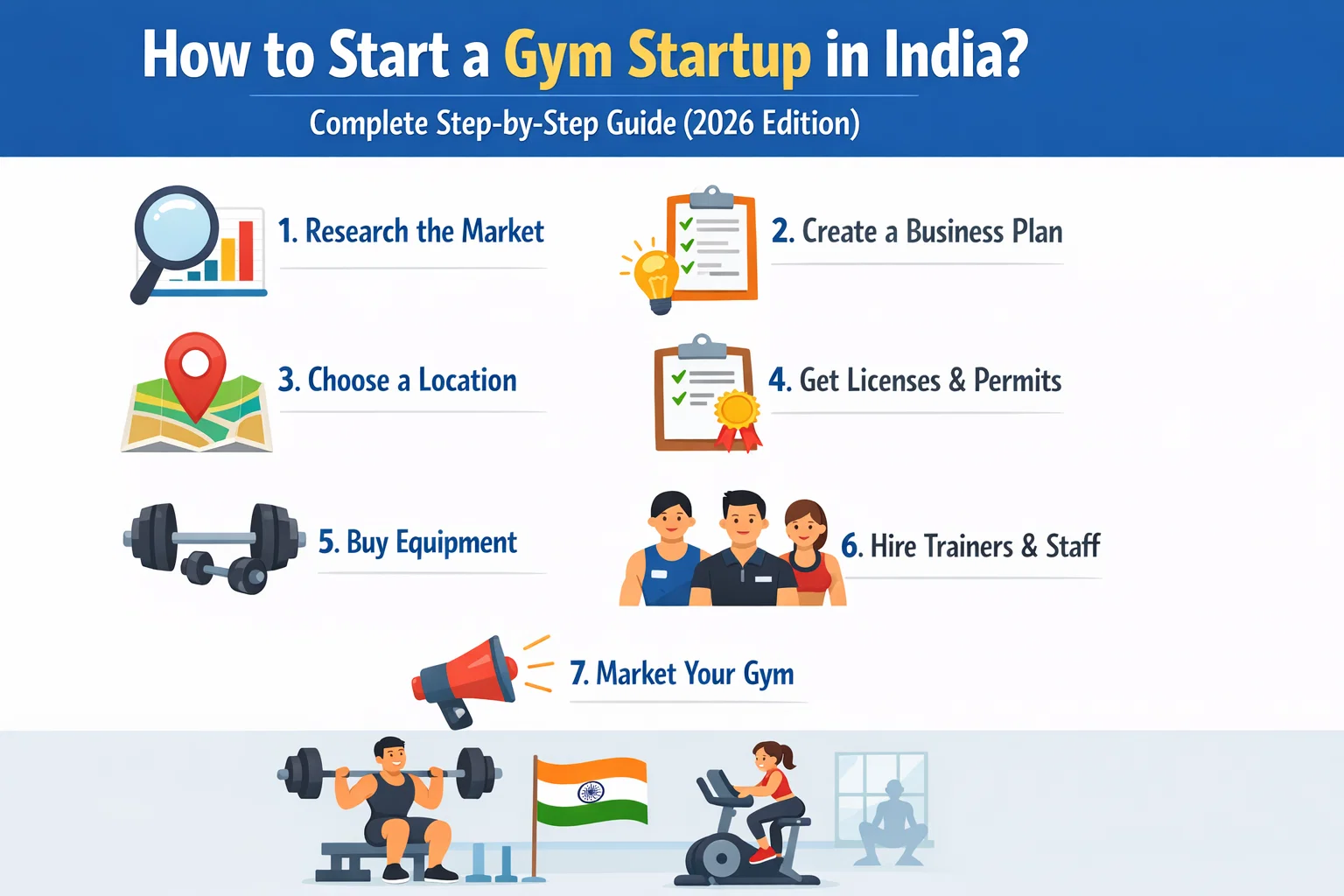
With rising health consciousness and the prevalence of lifestyle diseases, the gym and fitness industry in India is expanding at an unprecedented rate. From metro hubs like Mumbai and Bangalore to rapidly developing tier-2 and tier-3 towns, the demand for quality fitness spaces is at an all-time high. This makes launching a gym startup in India a highly profitable and future-proof business idea.
If you are an entrepreneur looking to start a gym business in India, this guide provides a roadmap to navigating location selection, equipment sourcing, and the essential legal and financial compliance required for long-term success.
1. Market Scope of Gym Business in India
The Indian fitness landscape has shifted from basic bodybuilding to holistic wellness. Key drivers include:
Preventative Healthcare: A 2026 outlook shows that more Indians are investing in fitness to avoid long-term medical costs.
Corporate Culture: Many IT parks and offices now partner with local gyms for employee wellness.
Youth Demographics: India’s young population is increasingly interested in strength training, CrossFit, and functional fitness.
Hybrid Models: Modern gyms now offer a mix of physical workouts and virtual app-based tracking, creating multiple revenue streams.
2. Choosing the Right Location for a Gym Startup
In the fitness world, location is the most critical factor for member retention. Most clients prefer a gym within a 10-minute commute from their home or workplace.
Ideal Location FactorsResidential Proximity: Targeting middle and upper-middle-income neighborhoods ensures a steady membership flow.
Commercial Visibility: Prime spots near malls, IT parks, or colleges act as a natural advertisement.
Accessibility: Ensure the facility has ample parking space and is easily reachable via public transport.
Floor Level: While the ground floor offers high visibility, many premium gyms prefer the first or second floor for better ventilation and lower rent.
Recommended Area SizeBoutique Studio: 800 – 1,200 sq. ft.
Standard Commercial Gym: 1,500 – 3,000 sq. ft.
Premium Health Club: 3,000+ sq. ft.
3. Cost to Start a Gym in India
Residential Proximity: Targeting middle and upper-middle-income neighborhoods ensures a steady membership flow.
Commercial Visibility: Prime spots near malls, IT parks, or colleges act as a natural advertisement.
Accessibility: Ensure the facility has ample parking space and is easily reachable via public transport.
Floor Level: While the ground floor offers high visibility, many premium gyms prefer the first or second floor for better ventilation and lower rent.
Boutique Studio: 800 – 1,200 sq. ft.
Standard Commercial Gym: 1,500 – 3,000 sq. ft.
Premium Health Club: 3,000+ sq. ft.
3. Cost to Start a Gym in India
The initial investment depends on the scale and "vibe" of your brand. Below is an estimated breakdown of the gym startup in India costs:
| Expense Category | Estimated Cost (INR) |
| Rent & Security Deposit | ₹1,00,000 – ₹3,00,000 |
| Gym Equipment | ₹5,00,000 – ₹20,00,000 |
| Interior & Specialized Flooring | ₹2,00,000 – ₹5,00,000 |
| Mirrors, Lighting & AC | ₹50,000 – ₹1,50,000 |
| Licenses & Registrations | ₹20,000 – ₹50,000 |
| Marketing & Pre-Sales | ₹50,000 – ₹1,00,000 |
| Staff Salaries (Buffer) | ₹1,00,000 – ₹2,00,000 |
| Total Investment | ₹10 Lakhs – ₹35 Lakhs+ |
4. Equipment Required for a Gym
To start a gym business in India that competes with top chains, you need a balance of cardio and strength zones.
Cardio: Treadmills, spin bikes, and cross-trainers.
Strength: Multi-gym stations, Smith machines, and cable pulleys.
Free Weights: Dumbbells, barbells, and adjustable benches.
Functional: Kettlebells, battle ropes, and yoga mats.
Pro-Tip: You can optimize your budget by sourcing high-quality refurbished equipment or leasing machines to preserve cash flow.
5. Document Requirements to Start a Gym in India
Legal readiness is vital to avoid local municipality penalties. Ensure you have the following:
Identity Proof: PAN Card, Aadhaar Card, and owner photographs.
Property Proof: Rent agreement or ownership sale deed.
Trade License: Issued by the local Municipal Corporation.
Shop & Establishment Registration: Mandatory for all commercial entities in India.
Fire Safety NOC: Essential for high-occupancy public spaces.
Police Clearance: Required in many states before operating a fitness center.
6. Business Registration for Gym Startup
Choosing the right legal structure is the foundation of your gym startup in India.
Sole Proprietorship: Easiest for small-scale local gyms.
LLP (Limited Liability Partnership) Registration : Protects partners from personal liability; ideal for 2+ owners.
Private Limited Company Registration : Best if you plan to scale, raise funding, or franchise your brand.
GST Registration: Mandatory if your annual turnover exceeds the threshold (typically ₹20-40 Lakhs).
7. Maintain Legal & Financial Compliance
Consistency in compliance ensures a "hassle-free" business.
Annual Renewals: Renew your Trade and Shop licenses on time.
GST Filings: Ensure monthly or quarterly returns are filed to maintain a good credit rating.
Employee Compliance: Pay salaries, PF, and ESI (if applicable) promptly.
Safety Audits: Conduct regular inspections of heavy machinery and electrical wiring.
8. Staffing & Trainers
Your trainers are the face of your business. Hire certified fitness experts (GFFI, ACE, or Gold’s Gym certified) to build credibility.
Personal Trainers: Crucial for high-margin revenue.
Receptionist: For managing memberships and inquiries.
Cleaning Staff: Vital for maintaining the hygiene standards that 2026 customers expect.
9. Marketing & Membership StrategyLocal SEO: Claim your Google Business Profile to rank for "best gym near me."
Pre-Launch Offers: Sell discounted "Founder Memberships" before the doors open.
Social Media: Use Instagram Reels for "Before & After" transformations and client testimonials.
Referral Programs: Reward existing members for bringing in friends with a free month or merchandise.
10. Revenue & Profit Potential
Local SEO: Claim your Google Business Profile to rank for "best gym near me."
Pre-Launch Offers: Sell discounted "Founder Memberships" before the doors open.
Social Media: Use Instagram Reels for "Before & After" transformations and client testimonials.
Referral Programs: Reward existing members for bringing in friends with a free month or merchandise.
A well-managed gym startup in India can see net profit margins of 25% to 40%.
Break-even Period: Typically 12 to 18 months.
Upselling: Increase profits by selling supplements, customized diet plans, and personal training packages.
Conclusion
Starting a gym startup in India is a rewarding journey that combines business growth with social impact. By securing a prime location, managing your gym equipment costs, and adhering to all beauty and fitness license requirements, you can create a sustainable brand.
Ready to launch your fitness brand?
If you need expert help with business registration, trade licenses, or GST compliance, visit firststartup.in to get professional assistance and kickstart your entrepreneurial journey today!