
How to Start a Dry Fruit Startup in India?
First Startup
Jan 30, 2026
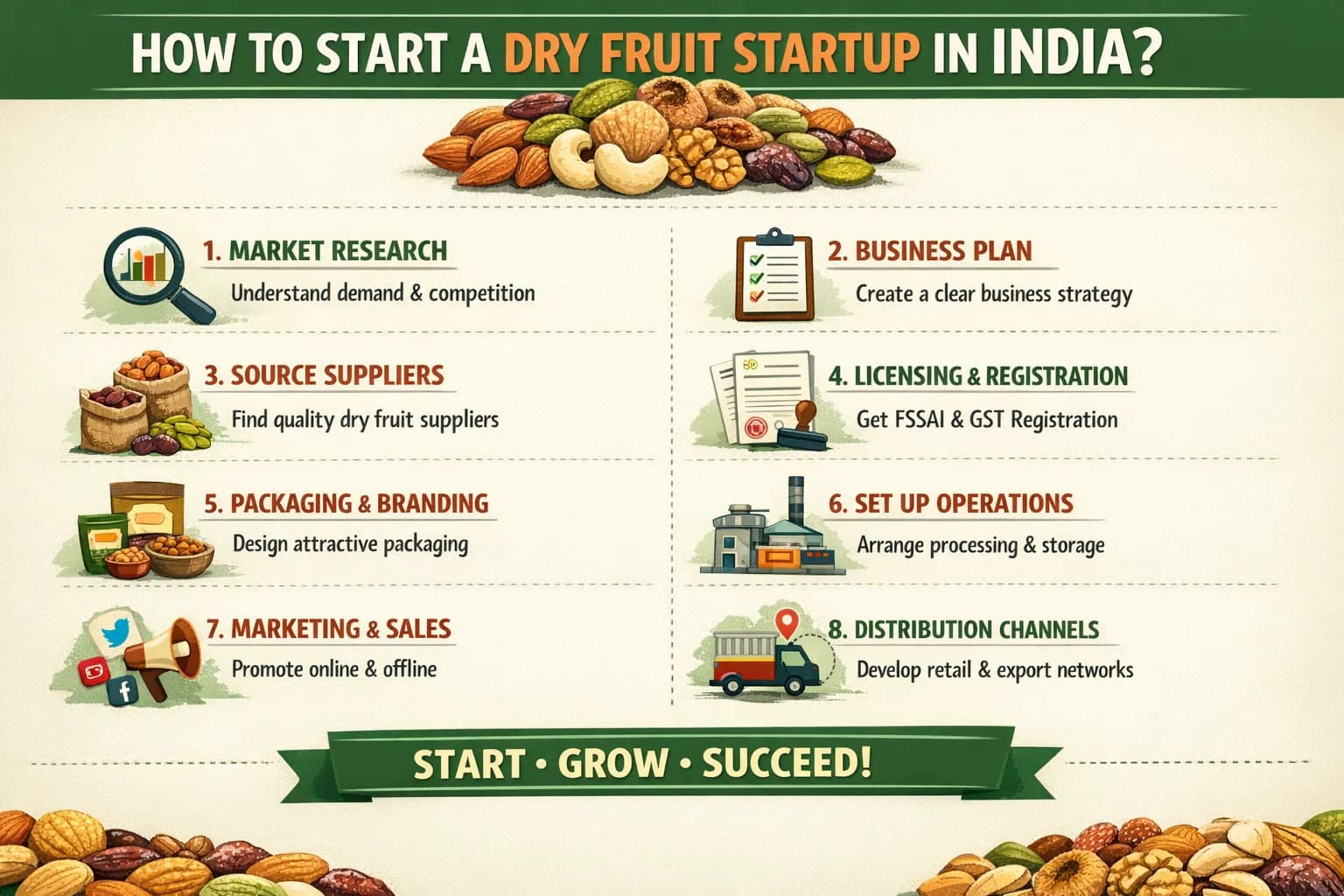
How to Start a Dry Fruit Startup in India?
Starting a dry fruit startup in India is a profitable business idea due to rising health awareness, increasing disposable income, and strong demand during festivals and weddings. Dry fruits like almonds, cashews, raisins, pistachios, and walnuts are consumed daily and also have strong B2B demand from sweet shops, hotels, bakeries, and corporate gifting companies.
This blog explains everything you need to know—from planning and registration to sourcing, investment, marketing, and growth.
Why Start a Dry Fruit Business in India?
Growing demand for healthy and premium food products
High profit margins (15%–40% depending on scale)
Strong seasonal and festive sales
Easy to start as a small or home-based business
Can expand to online, wholesale, and export markets
Step 1: Decide Your Dry Fruit Business Model
Choose the right model based on your budget and experience:
1. Retail Dry Fruit Store
Physical shop in market or residential area
Ideal for local customers and festive sales
2. Wholesale Dry Fruit Business
Bulk supply to retailers, sweet shops, hotels
Requires higher capital but offers volume sales
3. Online Dry Fruit Startup
Sell through your own website, Amazon, Flipkart, or Meesho
Lower overhead and wider reach
4. Dry Fruit Processing & Packaging
Roasting, flavoring, vacuum packing, private labeling
Higher margins and brand-building opportunity
Step 2: Market Research & Business Planning
Before investing, conduct proper market research:
Identify high-demand dry fruits in your target area
Analyze competitors’ pricing and packaging
Decide product range (premium, economy, flavored, organic)
Prepare a basic business plan including costs, pricing, and profit
Step 3: Business Registration & Legal Requirements
To legally start a dry fruit startup in India, complete the following registrations:
Mandatory Registrations
Business Registration (Sole Proprietorship, Partnership, LLP, or Private Limited Company)
FSSAI License (Mandatory for all food businesses)
GST Registration (Required if turnover exceeds limit or for online selling)
Shop & Establishment License (For physical stores)
Trade License (Issued by local municipal authority)
Optional but Recommended
MSME (Udyam) Registration
Trademark Registration for brand name
Step 4: Capital Investment & Cost Breakdown
Approximate investment required:
| Expense | Estimated Cost (₹) |
|---|---|
| Business registration & licenses | 5,000 – 20,000 |
| Shop rent (if any) | 10,000 – 40,000/month |
| Initial dry fruit stock | 1,00,000 – 5,00,000 |
| Packaging & branding | 20,000 – 1,00,000 |
| Equipment (weighing machine, sealing) | 15,000 – 50,000 |
| Marketing & online setup | 10,000 – 50,000 |
Total Investment: ₹1.5 lakh to ₹8 lakh (depending on scale)
Step 5: Sourcing Quality Dry Fruits
Buy dry fruits from trusted sources:
APMC Mandis (Delhi, Mumbai, Ahmedabad)
Importers and wholesalers
Direct farmers or cooperatives
International suppliers (for premium varieties)
Tip: Always check moisture content, size, freshness, and certifications.
Step 6: Packaging, Branding & Labeling
Good packaging increases trust and pricing power:
Use airtight or vacuum packaging
Clearly mention FSSAI number, net weight, MRP, and expiry
Create attractive branding for premium positioning
Offer combo packs and gift boxes for festivals
Step 7: Pricing & Profit Margin
Typical profit margins in dry fruit business:
Retail sales: 25%–40%
Wholesale supply: 10%–20%
Online branded sales: 30%–45%
Margins increase with private labeling and value-added products.
Step 8: Marketing & Sales Strategy
Offline Marketing
Local advertising & banners
Tie-ups with sweet shops and caterers
Festival discounts and sampling
Online Marketing
Google Business Profile
Instagram & WhatsApp marketing
Sell on Amazon, Flipkart, Swiggy Minis
SEO-optimized website & blogs
Step 9: Scaling & Expansion Ideas
Once established, expand your dry fruit startup by:
Adding flavored & roasted dry fruits
Launching healthy snack mixes
Supplying to corporates for gifting
Exporting dry fruits
Opening multiple outlets or franchises
Common Mistakes to Avoid
Ignoring FSSAI compliance
Poor quality control
Incorrect pricing strategy
Weak packaging & branding
No online presence
Final Thoughts
Starting a dry fruit startup in India is a smart and scalable business opportunity. With the right planning, quality sourcing, legal compliance, and strong branding, you can build a profitable and trusted dry fruit brand.
If you need help with FSSAI registration, GST, MSME registration, or trademark filing, professional support can save time and ensure compliance.
FAQs
Q1. Is FSSAI license mandatory for dry fruit business?
Yes, FSSAI license is compulsory for any food-related business in India.
Q2. Can I start a dry fruit business from home?
Yes, you can start from home with basic registration and FSSAI license.
Q3. Is dry fruit business profitable?
Yes, it offers good margins, especially with branding and online sales.