
How to Start a Startup at Home for Ladies in India
First Startup
Nov 12, 2026
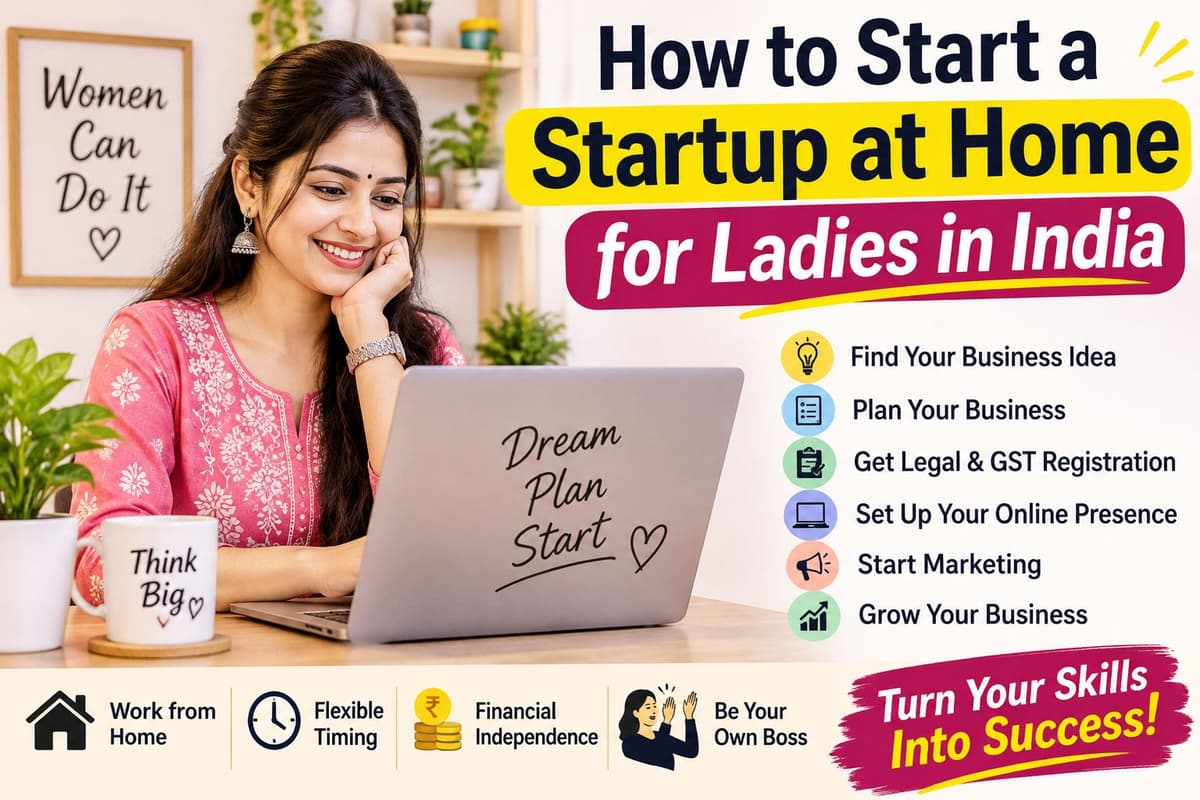
Starting a business from home is becoming a popular choice for women in India. With the growth of digital platforms, online marketplaces, social media, and home-based services, women can now turn their skills, creativity, and interests into profitable business opportunities without investing in a physical shop or office.
Whether you are a homemaker, student, working professional, or aspiring entrepreneur, you can start a small business from home with proper planning. From homemade food and boutique businesses to online tutoring, beauty services, digital marketing, and handmade products, there are many opportunities available.
If you are wondering how to start a startup at home for ladies in India, this guide explains business ideas, planning, investment, registration, marketing, and important steps to build your own business.
Why Should Ladies Start a Business from Home in India?
A home-based startup offers flexibility and the opportunity to become financially independent. Women can manage their business according to their schedules and gradually expand operations as their customer base grows.
Some major benefits include:
Low initial investment: Many home businesses can begin with limited resources.
Flexible working hours: Manage business activities according to your daily routine.
Financial independence: Generate your own income through products or services.
Work-life balance: Operate your business from home.
Business ownership: Build your own brand and customer base.
Growth opportunities: Expand from a small home business into a larger company.
15 Best Startup Ideas for Ladies at Home in India
Choosing the right business idea is the first step. Consider your skills, interests, available time, budget, and local market demand.
1. Homemade Food Business
If you enjoy cooking, you can start a homemade food business. You can sell homemade snacks, cakes, pickles, papad, sweets, lunch boxes, and other food products.
Start by accepting orders from neighbours, local customers, offices, and online platforms. Food businesses may require FSSAI registration or licensing, depending on the nature and scale of operations.
2. Online Boutique Business
Women interested in fashion can start an online boutique from home. You can sell sarees, suits, dresses, ethnic wear, jewellery, and fashion accessories.
You can promote your products through Instagram, WhatsApp Business, Facebook, and online marketplaces.
3. Beauty Parlour at Home
If you have beauty and makeup skills, you can offer services such as facial treatments, threading, waxing, hairstyling, bridal makeup, and basic skincare services.
You can begin with appointments at home and gradually build a professional beauty brand.
4. Handmade Products Business
Handmade products are suitable for women who enjoy creative work. You can manufacture and sell:
Handmade candles
Soaps
Decorative items
Gift hampers
Handmade jewellery
Home décor products
Customised gifts
You can sell these products through social media and e-commerce platforms.
5. Online Tuition and Coaching
Women with teaching experience can start online tuition classes from home. You can teach school subjects, languages, computer skills, competitive exam subjects, or specialised courses.
You may conduct classes through video conferencing platforms and promote your services through educational communities.
6. Digital Marketing Services
If you have knowledge of social media, content creation, SEO, or online advertising, you can start a digital marketing agency from home.
You can provide services such as:
Social media management
SEO services
Website content writing
Graphic design
Email marketing
Online advertising management
This business can be started with a computer, internet connection, and the required skills.
7. YouTube Channel or Content Creation
Women interested in cooking, fashion, education, beauty, parenting, or lifestyle can start a YouTube channel or create content for social media.
Income opportunities may include advertising, brand collaborations, affiliate marketing, and sponsored content. Earnings are not guaranteed and depend on audience growth and platform policies.
8. Tailoring and Fashion Designing
If you know stitching, embroidery, or fashion designing, you can start a tailoring business from home.
You can provide blouse stitching, suit alterations, custom dresses, embroidery, and customised clothing services.
9. Online Reselling Business
You can start an online reselling business by sourcing products from wholesalers and selling them to customers.
Popular categories include clothing, cosmetics, accessories, kitchen products, home décor, and footwear. Compare supplier prices and product quality before accepting customer orders.
10. Freelancing Business
Women with professional skills can work independently as freelancers. Some popular freelance services include:
Content writing
Translation
Data entry
Web development
Graphic designing
Virtual assistance
Video editing
You can find clients through professional networks and freelancing platforms.
11. Daycare or Home-Based Childcare
Women with suitable experience and facilities may consider starting a small childcare service from home.
Before starting, check applicable local permissions, safety requirements, building rules, and any childcare-related regulations.
12. Organic Products Business
You can sell products such as organic food items, natural skincare products, herbal products, and homemade wellness-related goods.
Ensure product claims, labelling, quality, and applicable licences comply with the rules relevant to the products you sell.
13. Bakery Business
A home bakery can specialise in cakes, cookies, cupcakes, brownies, breads, and customised desserts.
You can initially take orders for birthdays, anniversaries, festivals, and small events. Check the food safety requirements applicable to your business.
14. Digital Products Business
If you have creative or professional knowledge, you can create and sell digital products such as:
E-books
Online courses
Printable planners
Digital templates
Study notes
Business documents
Digital products can be sold online without maintaining physical inventory.
15. Event Planning and Decoration
Women interested in decoration and organising events can start a home-based event planning business.
You can provide birthday decorations, small party arrangements, baby shower decorations, festive arrangements, and customised event planning.
Step-by-Step Process to Start a Startup at Home for Ladies in India
Starting a business requires planning, market research, and the right legal structure. Follow these steps to build your home-based startup.
Step 1: Select Your Business Idea
Choose a business based on your interests, knowledge, skills, and available investment.
Before finalising your idea, consider:
What products or services can you offer?
Who will purchase your products?
Is there demand in your target market?
Who are your competitors?
How will your business generate revenue?
Step 2: Conduct Market Research
Market research helps you understand customer requirements and competition.
Study similar businesses, compare prices, identify your target customers, and understand how competitors promote their products.
You can also ask potential customers for feedback before launching your business.
Step 3: Prepare a Business Plan
A business plan provides direction and helps you manage your startup.
Your business plan should include:
Business name and description
Products or services
Target customers
Initial investment
Pricing strategy
Marketing plan
Expected expenses
Revenue model
Future expansion strategy
Step 4: Decide Your Business Structure
Select a suitable legal structure according to your business requirements.
Sole Proprietorship: Suitable for an individual starting and managing a small business.
Partnership Firm: Suitable when two or more individuals want to operate a business together.
Limited Liability Partnership (LLP): Offers a separate legal structure with limited liability for its partners.
Private Limited Company: Suitable for businesses planning to build a formal company, bring in investors, or expand operations.
The right structure depends on ownership, liability, investment, compliance requirements, and future plans.
Step 5: Complete Business Registration
Depending on the selected structure, you may need to complete the applicable registration process.
Common business registrations and services include:
Company Registration
LLP Registration
Partnership Firm Registration
GST Registration, where applicable
MSME/Udyam Registration
Trademark Registration
FSSAI Registration or Licence for applicable food businesses
Not every business needs every registration. Requirements depend on the business activity, turnover, location, and applicable laws.
Step 6: Open a Business Bank Account
Keep your business transactions organised. Depending on your business structure and bank requirements, open an appropriate business current account.
Maintain separate records of business income, expenses, customer payments, and supplier payments.
Step 7: Create Your Online Presence
An online presence helps customers discover your business.
You can create:
A professional business website
Instagram business account
Facebook business page
WhatsApp Business profile
Google Business Profile, if eligible
Use clear product photographs, accurate descriptions, contact information, and customer reviews to build trust.
Step 8: Promote Your Business
Marketing helps you reach potential customers and generate enquiries.
Some useful marketing methods include:
Social media marketing
WhatsApp marketing with customer consent
Search engine optimisation (SEO)
Google Ads
Instagram and Facebook advertising
Referral marketing
Local business networking
Start with suitable low-cost marketing activities and measure which channels generate genuine enquiries and sales.
Documents Required to Start a Business from Home
The documents required depend on the business structure and registration selected. Commonly requested documents may include:
PAN Card
Aadhaar Card or other accepted identity proof
Address proof
Passport-size photograph
Mobile number and email address
Business address proof
Bank account details
Rent agreement or owner's NOC, where applicable
Business activity details
Additional documents required for specific licences
For company or LLP registration, additional documents and digital signatures may be required.
How Much Investment Is Required to Start a Home-Based Startup?
The investment depends on the business idea, equipment, inventory, marketing, and operating expenses.
For example:
| Business Type | Main Investment Requirements |
|---|---|
| Homemade food | Ingredients, packaging, kitchen equipment |
| Online boutique | Inventory, photography, packaging |
| Beauty services | Beauty products, equipment, hygiene supplies |
| Online tuition | Computer, internet, teaching materials |
| Digital marketing | Computer, internet, software |
| Handmade products | Raw materials, tools, packaging |
| Bakery | Baking equipment, ingredients, packaging |
| Freelancing | Computer, internet, professional tools |
You do not need to invest a large amount immediately. Start with essential resources, test customer demand, and expand when your business becomes stable.
Government Schemes and Support for Women Entrepreneurs in India
Women entrepreneurs may explore government initiatives and financial support programmes, depending on their eligibility and the current scheme guidelines.
Some options include:
1. Pradhan Mantri MUDRA Yojana: Provides institutional credit support to eligible micro and small business activities through participating lenders.
2. Stand-Up India: A scheme designed to facilitate bank loans for eligible women and SC/ST entrepreneurs setting up greenfield enterprises, subject to current scheme provisions.
3. PMEGP: The Prime Minister's Employment Generation Programme supports eligible new micro-enterprises through a credit-linked subsidy mechanism.
4. Udyam Registration: Eligible micro, small, and medium enterprises can register through the official Udyam Registration portal. Registration is free on the government portal.
Always check the official scheme guidelines, eligibility criteria, loan terms, and application process before applying. Scheme availability and conditions can change.
Important Tips for Women Starting a Business from Home
To build a sustainable home-based startup, keep these points in mind:
Start with a business idea that matches your skills.
Research your customers before investing.
Prepare a realistic budget.
Maintain proper financial records.
Focus on product quality and customer satisfaction.
Use social media consistently.
Complete registrations and licences applicable to your business.
Protect your brand name through suitable trademark protection.
Avoid unnecessary expenses in the beginning.
Reinvest carefully as your business grows.
How First Startup Can Help Women Entrepreneurs
Starting a business involves more than selecting an idea. Entrepreneurs may also need help with business registration, tax compliance, licences, accounting, and brand protection.
First Startup provides professional assistance for business and compliance-related services, including:
Private Limited Company Registration
LLP Registration
Partnership Firm Registration
GST Registration
MSME/Udyam Registration
FSSAI Registration and Licensing
Trademark Registration
Accounting and Bookkeeping
ITR Filing
ROC Compliance
Our team helps entrepreneurs understand applicable registration and compliance requirements so they can focus on developing their businesses.
Contact First Startup
Phone: +91 63956 22281
Email: [email protected]
Website: https://www.firststartup.in/
Frequently Asked Questions (FAQs)
1. Which is the best startup for ladies at home in India?
Some popular options include homemade food, online boutique, beauty services, tailoring, online tuition, digital marketing, freelancing, handmade products, and home bakery businesses. The best option depends on your skills, budget, and customer demand.
2. Can a woman start a business from home without investment?
Some service-based businesses, such as freelancing, online tutoring, content writing, and virtual assistance, can be started with existing resources. However, internet access, equipment, marketing, and other operating costs may still apply.
3. Which business is best for housewives in India?
Homemade food, tailoring, online reselling, beauty services, online tuition, and handmade products are options that homemakers can explore based on their skills and available time.
4. Is registration compulsory for a home-based business?
The registration requirements depend on the business structure, activity, turnover, and applicable laws. Certain activities may require specific licences even when operated from home.
5. Can ladies register a Private Limited Company in India?
Yes. Women can incorporate and own a Private Limited Company in India, subject to the applicable company law requirements.
6. Is GST registration required for a home-based business?
GST registration depends on applicable turnover limits, business activities, supply type, and other provisions under GST law. Some businesses may need registration even below the general threshold.
7. Can women get a business loan in India?
Eligible women entrepreneurs can explore business finance options through banks, financial institutions, and applicable government schemes. Approval depends on eligibility, lender assessment, and scheme conditions.
8. What is MSME registration for women entrepreneurs?
Eligible businesses can obtain Udyam Registration to be recognised as a micro, small, or medium enterprise. It may help businesses access applicable MSME benefits, subject to scheme conditions.
Conclusion
Starting a startup at home for ladies in India can be an excellent opportunity to build financial independence and develop a business around personal skills and interests. Whether you choose a food business, boutique, beauty services, online teaching, freelancing, or digital products, begin with a clear business plan and understand your customers.
Start small, maintain quality, promote your business consistently, and complete the registrations and licences applicable to your activity. With planning and continuous improvement, a home-based business can grow into a recognised brand.