
How to Open a Company in Dubai: Complete Step-by-Step Guide
First Startup
Sep 19, 2026
Dubai has become a major business destination for entrepreneurs, startups, investors, and international companies. Its modern infrastructure, business-friendly environment, global connectivity, and access to international markets make it an attractive location for setting up a business.
If you are planning to start a business in Dubai, you need to understand the available company structures, licensing requirements, documentation, costs, and registration process.
This guide explains how to open a company in Dubai step by step and covers important aspects you should know before starting the process.
Why Open a Company in Dubai?
Dubai offers several opportunities for entrepreneurs and businesses across different industries. Depending on your business activity and chosen jurisdiction, you may be able to establish a company in a mainland area or a free zone.
Some common reasons entrepreneurs consider Dubai for business setup include:
Access to international markets
Modern infrastructure and business facilities
Multiple business activity options
Availability of mainland and free zone company structures
Strategic location between major international markets
Business setup options for foreign investors
Professional business support services
Opportunities to operate in sectors such as trading, consulting, technology, e-commerce, logistics, and professional services
Before registering a company, it is important to select the appropriate business structure and jurisdiction based on your business requirements.
Types of Company Setup in Dubai
There are different options for establishing a business in Dubai. The two commonly considered jurisdictions are Dubai Mainland and Dubai Free Zones.
Dubai Mainland Company
A mainland company is generally licensed through the relevant Dubai authority and can conduct business according to the activities permitted under its commercial licence.
Mainland setup may be suitable for businesses that want to operate in the wider UAE market or work with local and international customers.
Dubai Free Zone Company
Dubai has several free zones designed for different industries and business activities.
Free zone companies can offer various benefits depending on the specific free zone, licence type, and business activity. Some free zones also provide business setup packages, office solutions, and support services for international entrepreneurs.
The rules, costs, ownership structures, and permitted activities can vary between free zones, so choosing the right jurisdiction is an important step.
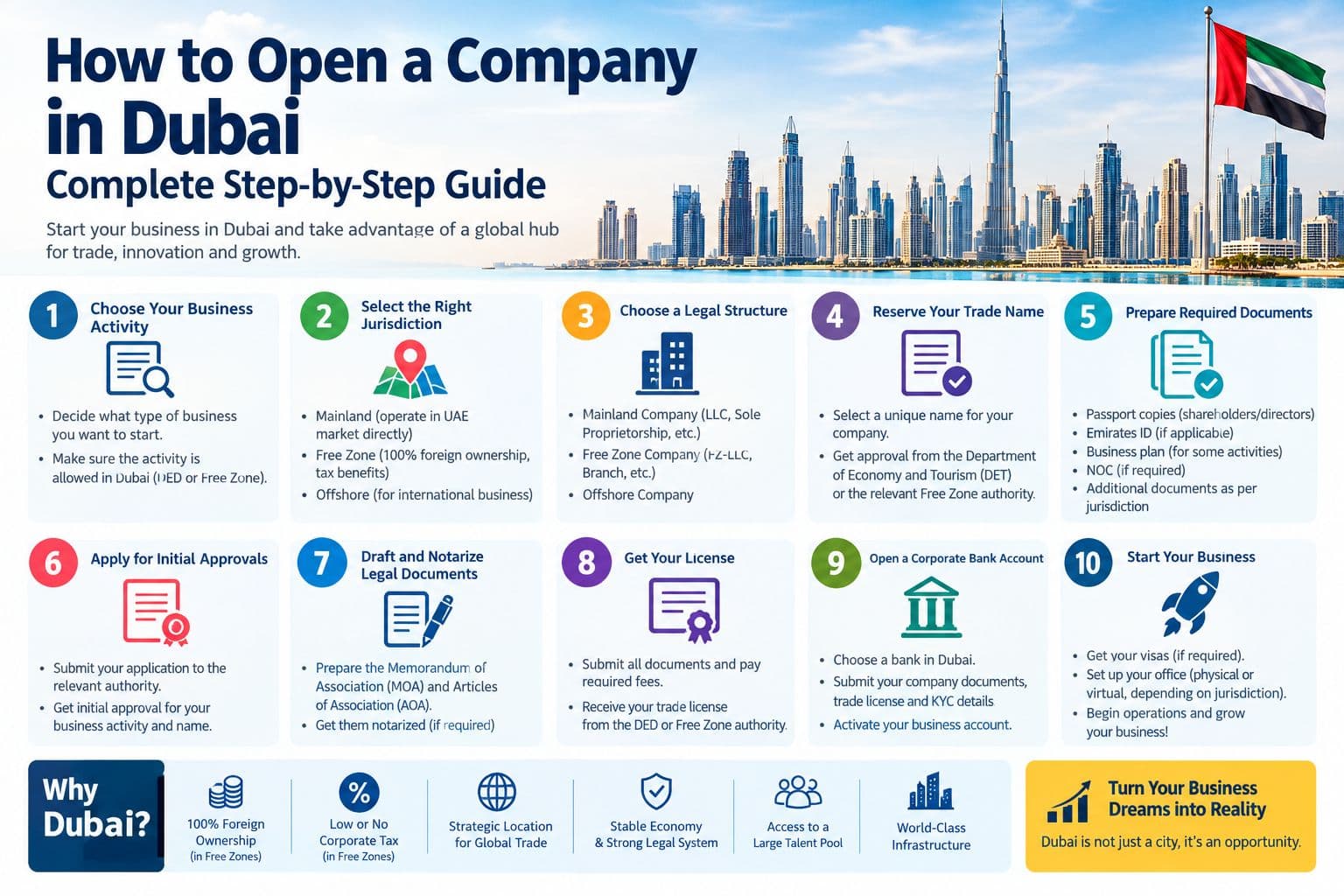
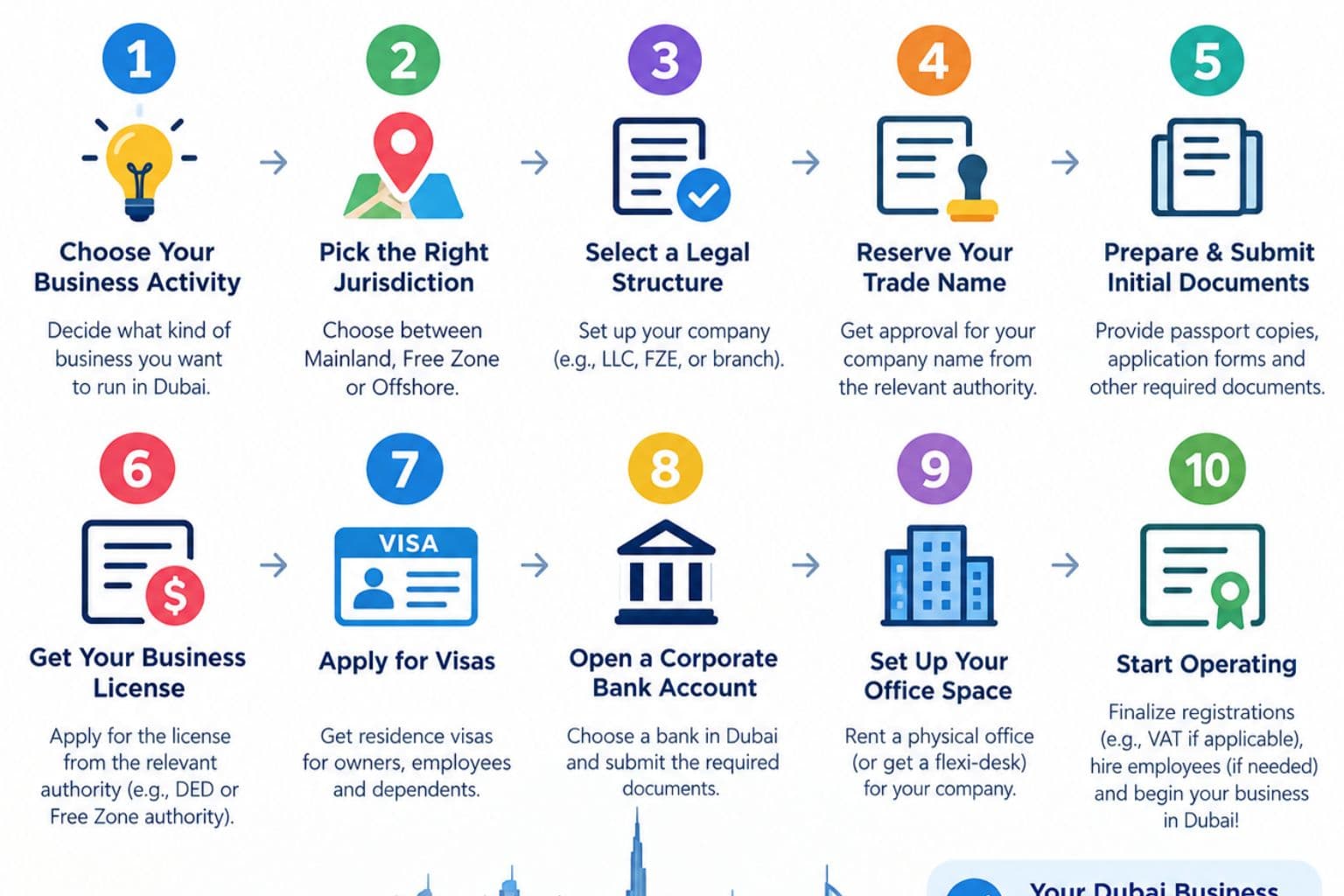
How to Open a Company in Dubai Step by Step
The company formation process can vary depending on the jurisdiction, business activity, and company structure. However, the process generally involves the following steps.
Step 1: Decide Your Business Activity
The first step is to determine what your company will do.
Examples of business activities include:
General trading
E-commerce
IT services
Software development
Marketing and advertising
Management consultancy
Professional services
Import and export
Logistics
Real estate-related activities
Financial and business consultancy
Your business activity will influence the type of licence and approvals you may need.
Step 2: Choose the Business Jurisdiction
After selecting your activity, decide whether you want to establish your company in Dubai Mainland or a Free Zone.
Your choice should depend on factors such as:
Target customers
Business activity
Office requirements
Visa requirements
Licensing requirements
Budget
UAE market requirements
International business plans
A professional business setup consultant can help you compare available options based on your requirements.
Step 3: Select a Company Structure
The next step is selecting an appropriate legal structure.
Depending on the jurisdiction and activity, available structures may include forms such as:
Limited Liability Company (LLC)
Free Zone Establishment (FZE)
Free Zone Company (FZCO/FZ-LLC)
Branch office
Other permitted legal structures
The exact options depend on the authority and business activity.
Step 4: Choose a Company Name
You will generally need to select a suitable company name before completing registration.
The proposed name must comply with the applicable naming rules. It should not conflict with existing registered names or violate applicable regulations.
It is advisable to prepare multiple name options in case your preferred name is unavailable.
Step 5: Prepare the Required Documents
The documents required depend on the company type, jurisdiction, shareholders, and business activity.
Common documents may include:
Passport copies of shareholders
Passport-size photographs
Contact details
Proposed company name
Business activity details
Application forms
Proof of address, where applicable
Business plan for certain activities
Corporate documents for corporate shareholders
Additional documents or approvals may be required for specific regulated activities.
Step 6: Apply for Initial Approval
Once the necessary information and documents are prepared, the application can be submitted to the relevant authority.
Initial approval indicates that the proposed business structure and activity can proceed subject to completion of the remaining requirements.
Some activities may require approval from additional government or regulatory authorities.
Step 7: Arrange an Office or Business Address
Depending on the company type and licence, you may need an approved business address or office facility.
Free zones may provide different office solutions, such as:
Flexi-desk
Shared office
Serviced office
Dedicated office
The requirements vary depending on the licence and free zone.
Step 8: Obtain the Business Licence
After completing the required formalities and paying the applicable government and licensing fees, the relevant authority can issue the business licence.
The licence confirms that the company is authorised to conduct the approved business activities.
Common licence categories may include:
Commercial licence
Professional licence
Industrial licence
E-commerce licence
Other specialised licences
The appropriate licence depends on the company's business activity.
Step 9: Complete Immigration and Visa Formalities
If you plan to live and work in the UAE, you may need to complete the applicable immigration and visa procedures.
Depending on the circumstances, company owners, employees, and other eligible individuals may apply for the relevant UAE residence visa.
The number of visas available can depend on factors such as the company structure, office size, licence type, and applicable regulations.
Step 10: Open a Corporate Bank Account
After establishing the company, you can apply for a corporate bank account with a suitable UAE bank.
Banks generally conduct their own compliance and due diligence checks.
You may be asked to provide documents such as:
Company licence
Certificate of incorporation
Memorandum and Articles, where applicable
Passport and identification documents
Proof of address
Business profile
Information about expected business activities and transactions
Bank account approval is subject to the bank's internal policies and compliance requirements.
Documents Required to Open a Company in Dubai
The exact documentation varies depending on the company structure and jurisdiction.
Generally, entrepreneurs may need:
Passport copy
Passport-size photograph
Proposed company name
Business activity details
Application forms
Proof of residential address, where required
Business plan, where applicable
Corporate documents for corporate shareholders
Additional regulatory approvals for specific activities
It is recommended to confirm the document requirements with the relevant licensing authority before submitting an application.
How Much Does It Cost to Open a Company in Dubai?
The cost of opening a company in Dubai is not a single fixed amount.
The total cost can depend on:
Business activity
Mainland or free zone jurisdiction
Licence type
Number of shareholders
Office requirements
Visa requirements
Government fees
Registration fees
Additional approvals
Corporate bank requirements
Accounting and compliance requirements
Free zone packages may have different pricing structures, while mainland setup costs can vary depending on the licence and business requirements.
Therefore, entrepreneurs should obtain a detailed quotation based on their specific business activity rather than relying on a standard advertised price.
Dubai Free Zone vs Mainland Company
The right option depends on your business model and objectives.
| Factor | Free Zone | Mainland |
|---|---|---|
| Business jurisdiction | Specific free zone | Dubai mainland |
| Business activities | Depends on free zone | Depends on licensing authority |
| Office options | Vary by free zone | Depends on requirements |
| Licensing | Free zone authority | Relevant mainland authority |
| Market access | Subject to applicable rules | Subject to applicable rules |
| Setup cost | Varies | Varies |
| Visa options | Depends on package and regulations | Depends on licence and office requirements |
Because regulations and commercial requirements can change, businesses should verify the latest requirements before registration.
Can Foreigners Open a Company in Dubai?
Foreign entrepreneurs can establish businesses in Dubai, subject to the applicable UAE laws, licensing rules, business activity requirements, and jurisdiction-specific regulations.
The exact ownership and licensing structure depends on factors such as the selected jurisdiction and business activity.
Foreign investors should also consider immigration, tax, banking, accounting, and ongoing compliance requirements before starting the company.
Tax and Compliance Considerations
Setting up a company is only the first part of running a business in Dubai.
Depending on the company's activities, revenue, structure, and applicable UAE regulations, the business may have tax registration, accounting, bookkeeping, corporate tax, VAT, or other compliance obligations.
Businesses should maintain proper financial records and review their tax obligations regularly.
For complex activities or international transactions, professional tax and accounting advice may be appropriate.
Common Mistakes to Avoid When Starting a Company in Dubai
Entrepreneurs should carefully review their business requirements before registration.
Common mistakes include:
Selecting the wrong business activity
Choosing a jurisdiction without comparing requirements
Not checking licence restrictions
Underestimating office and visa costs
Ignoring ongoing compliance
Providing incomplete documentation
Choosing a company name without checking availability
Assuming every free zone has the same rules
Not planning for corporate banking requirements
Proper planning can help reduce unnecessary delays and unexpected costs.
Why Choose First Startup for Dubai Company Formation?
First Startup provides business registration and professional support services for entrepreneurs and companies.
Our team can assist with understanding the company formation process, documentation, licensing requirements, business structure, and related compliance requirements.
Depending on your business needs, our support can include:
Dubai company registration guidance
Free zone company setup assistance
Mainland company formation support
Business licence assistance
Documentation support
Corporate tax and compliance guidance
Accounting and bookkeeping support
Business setup consultation
Before starting the registration process, we help you understand the applicable requirements so you can select a structure that matches your business objectives.
Frequently Asked Questions
How long does it take to open a company in Dubai?
The timeline depends on the business activity, jurisdiction, documentation, approvals, and licensing authority. Straightforward applications may be processed relatively quickly, while regulated activities can require additional approvals.
Can I open a company in Dubai without living in the UAE?
In some circumstances, foreign entrepreneurs can start the company formation process without being UAE residents. However, visa, immigration, banking, and physical presence requirements can vary depending on the situation.
Is a free zone company the same as a mainland company?
No. Free zone and mainland companies are established under different licensing jurisdictions and can have different rules concerning activities, office requirements, market access, and compliance.
Do I need an office to start a company in Dubai?
Office requirements depend on the company structure, jurisdiction, licence, and business activity. Some free zones offer flexible office solutions, while certain businesses may require a dedicated physical office.
Can foreigners own a company in Dubai?
Foreign ownership options depend on the applicable jurisdiction, business activity, and current UAE regulations. The ownership structure should be confirmed before registration.
What documents are needed to start a company in Dubai?
Common documents include passport copies, photographs, proposed company name, business activity information, application forms, and other documents depending on the company structure and activity.
Do Dubai companies need to register for VAT?
VAT registration depends on the business's taxable supplies, applicable thresholds, and UAE VAT rules. Businesses should assess their circumstances to determine whether registration is mandatory or voluntary.
Conclusion
Opening a company in Dubai involves several important steps, from selecting your business activity and jurisdiction to obtaining the appropriate licence and completing banking and compliance formalities.
The process can be straightforward when you prepare the required documents and choose a company structure that matches your business requirements.
If you are planning to open a company in Dubai, First Startup can help you understand the registration process, documentation, licensing options, and related business compliance requirements.
Plan your Dubai business setup carefully and get professional guidance before starting the registration process.