
Is a Food Franchise a Good Startup for First-Time Entrepreneurs?
First Startup
Jan 31, 2026
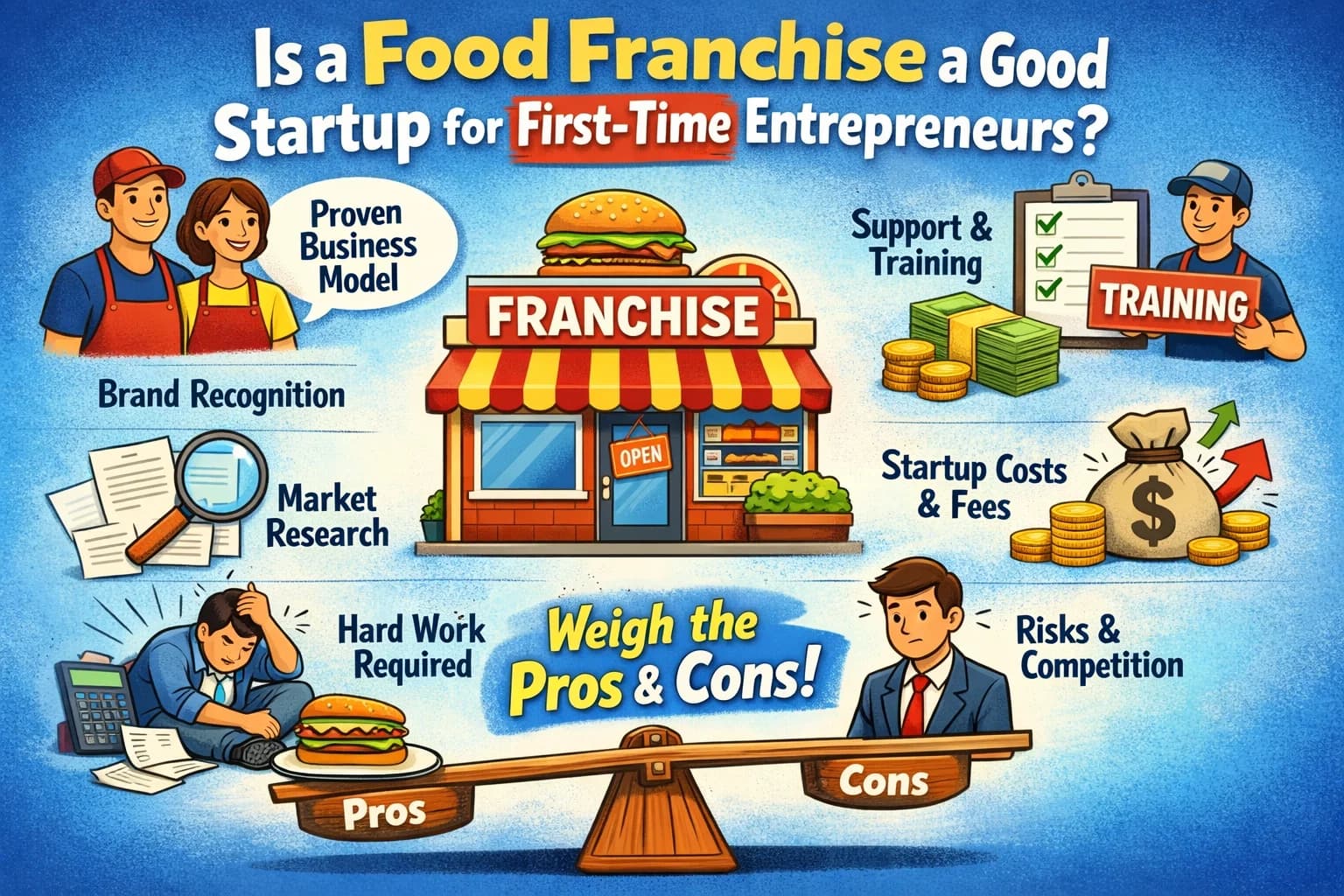
Starting a business for the first time can feel overwhelming—especially when you’re worried about risk, investment, and competition. This is why many first-time entrepreneurs in India ask a common question: Is a food franchise a good startup option?
With India’s ever-growing love for food, cafes, quick-service restaurants (QSRs), and cloud kitchens, food franchises have become one of the most popular startup choices. But is it really the right move for beginners? Let’s break it down in simple terms.
What Is a Food Franchise?
A food franchise is a business model where you operate a food outlet using the brand name, menu, systems, and support of an established company. In return, you pay a franchise fee and follow their operational guidelines.
Examples include:
Fast food chains
Cafe brands
Ice cream and dessert outlets
Cloud kitchen franchises
Beverage and juice brands
Why Food Franchises Are Popular in India
India’s food and beverage industry is booming due to:
Rising urban population
Increasing disposable income
Busy lifestyles driving demand for ready-to-eat food
Growth of food delivery apps like Swiggy & Zomato
This makes food franchises an attractive and scalable startup idea.
Is a Food Franchise Good for First-Time Entrepreneurs?Short answer: Yes, if chosen wisely.
Here’s why 👇
Advantages of a Food Franchise for Beginners1. Established Brand Recognition
As a first-time entrepreneur, building trust is hard. A franchise gives you:
A known brand name
Existing customer base
Instant market credibility
This reduces the struggle of attracting customers from day one.
2. Proven Business Model
Food franchises work on tested and successful models.
You don’t need to experiment with:
Menu pricing
Recipes
Supplier networks
Marketing strategies
This lowers the risk of failure compared to starting a food brand from scratch.
3. Training & Operational Support
Most food franchisors provide:
Staff training
Kitchen operations guidance
Quality control systems
POS & billing software
This is a huge advantage if you have no prior food business experience.
4. Easier Marketing & Promotions
National and regional food franchises invest heavily in:
Online marketing
Social media campaigns
Festival offers
Influencer collaborations
As a franchisee, you benefit from these promotions without extra effort.
5. Faster Break-Even Period
Because of:
Brand recall
Regular footfall
Delivery platform presence
Many food franchises achieve break-even faster than independent startups.
Challenges of a Food Franchise (You Should Know)
No business is perfect. Here are some realities 👇
1. Initial Investment Can Be High
Depending on the brand, investment may include:
Franchise fee
Setup & interiors
Equipment & kitchen setup
Security deposit
Some premium brands may require ₹15–50 lakhs or more.
2. Royalty & Profit Sharing
Most franchisors charge:
Monthly royalty (percentage of sales)
Marketing or brand fees
This can reduce net profit margins.
3. Limited Creative Freedom
As a franchise owner:
You can’t change the menu freely
Branding and pricing are controlled
Operations must follow brand SOPs
If you want full independence, this model may feel restrictive.
4. Location Dependency
Even the best franchise can fail if:
Location is weak
Footfall is low
Local demand doesn’t match the brand
Proper location analysis is crucial.
Cost of Starting a Food Franchise in India
The investment varies by brand type:
| Franchise Type | Approx Investment |
|---|---|
| Ice Cream / Juice Bar | ₹5 – ₹10 lakhs |
| QSR / Fast Food | ₹10 – ₹25 lakhs |
| Cafe / Coffee Brand | ₹15 – ₹40 lakhs |
| Cloud Kitchen Franchise | ₹5 – ₹12 lakhs |
Note: Costs vary by city and brand.
Legal & Registration Requirements
Before starting a food franchise, you’ll need:
Business registration (Proprietorship, LLP, or Pvt Ltd)
FSSAI license
GST registration
Trade license
Fire & health approvals (if applicable)
Franchise agreement review
Legal compliance is critical to avoid future penalties.
Who Should Choose a Food Franchise?
A food franchise is ideal if you:
Are a first-time entrepreneur
Want lower business risk
Prefer a guided business model
Have limited industry experience
Can follow systems and processes
When Is a Food Franchise NOT a Good Idea?
You may want to reconsider if:
You want complete creative control
You have a very low budget
You don’t want to share profits
You’re not ready for long working hours
Final Verdict: Is a Food Franchise a Good Startup?
Yes, a food franchise is a great startup option for first-time entrepreneurs, especially in India—if you choose the right brand, location, and investment level.
It offers:
Lower risk than starting from scratch
Strong brand support
Faster growth potential
However, success still depends on:
Daily involvement
Cost control
Staff management
Customer service
FAQ 1: Is a food franchise a good startup for first-time entrepreneurs?
Yes, a food franchise is a good startup for first-time entrepreneurs because it offers a proven business model, brand recognition, training support, and lower risk compared to starting a food business from scratch.
2: How much investment is required to start a food franchise in India?
The investment to start a food franchise in India usually ranges from ₹5 lakh to ₹40 lakh, depending on the brand, location, outlet size, and business format such as QSR, café, or cloud kitchen.
3: Which food franchise is best for beginners in India?
Food franchises with low investment, strong support, and simple menus—such as ice cream, fast food, cloud kitchens, and beverage brands—are considered best for beginners in India.
4: What are the advantages of a food franchise business?
Key advantages include:
Established brand trust
Proven operating system
Training & marketing support
Faster break-even period
Lower failure risk
5: What are the disadvantages of a food franchise?
Disadvantages include limited business freedom, royalty payments, dependency on franchisor decisions, and higher initial investment compared to small independent food businesses.
6: Is a food franchise profitable in India?
Yes, a food franchise can be profitable in India if the location is right, operational costs are controlled, and brand demand is strong. Many franchises achieve break-even within 12–24 months.
7: What licenses are required to start a food franchise in India?
You need:
FSSAI License
GST Registration
Trade License
Shop & Establishment Registration
Fire & Health approvals (if applicable)
8: Is a food franchise better than starting your own restaurant?
For first-time entrepreneurs, a food franchise is often better due to lower risk and brand support. However, starting your own restaurant offers more creative freedom and higher long-term margins.
9: Can I start a food franchise with no experience?
Yes, most food franchisors provide complete training and operational guidance, making it suitable even for entrepreneurs with no prior food business experience.
10: How long does it take to start a food franchise business?
On average, it takes 30–90 days to start a food franchise, including documentation, outlet setup, licensing, and staff training.
Startup Registration Support Number for India
Our Startup Registration Support Number, +91 63956 22281, is available to help you register your startup smoothly and legally.