
How to Build Successful Coworking Space Startups in India (2026 Guide: Cost, Plan & Profits)
First Startup
Apr 24, 2026
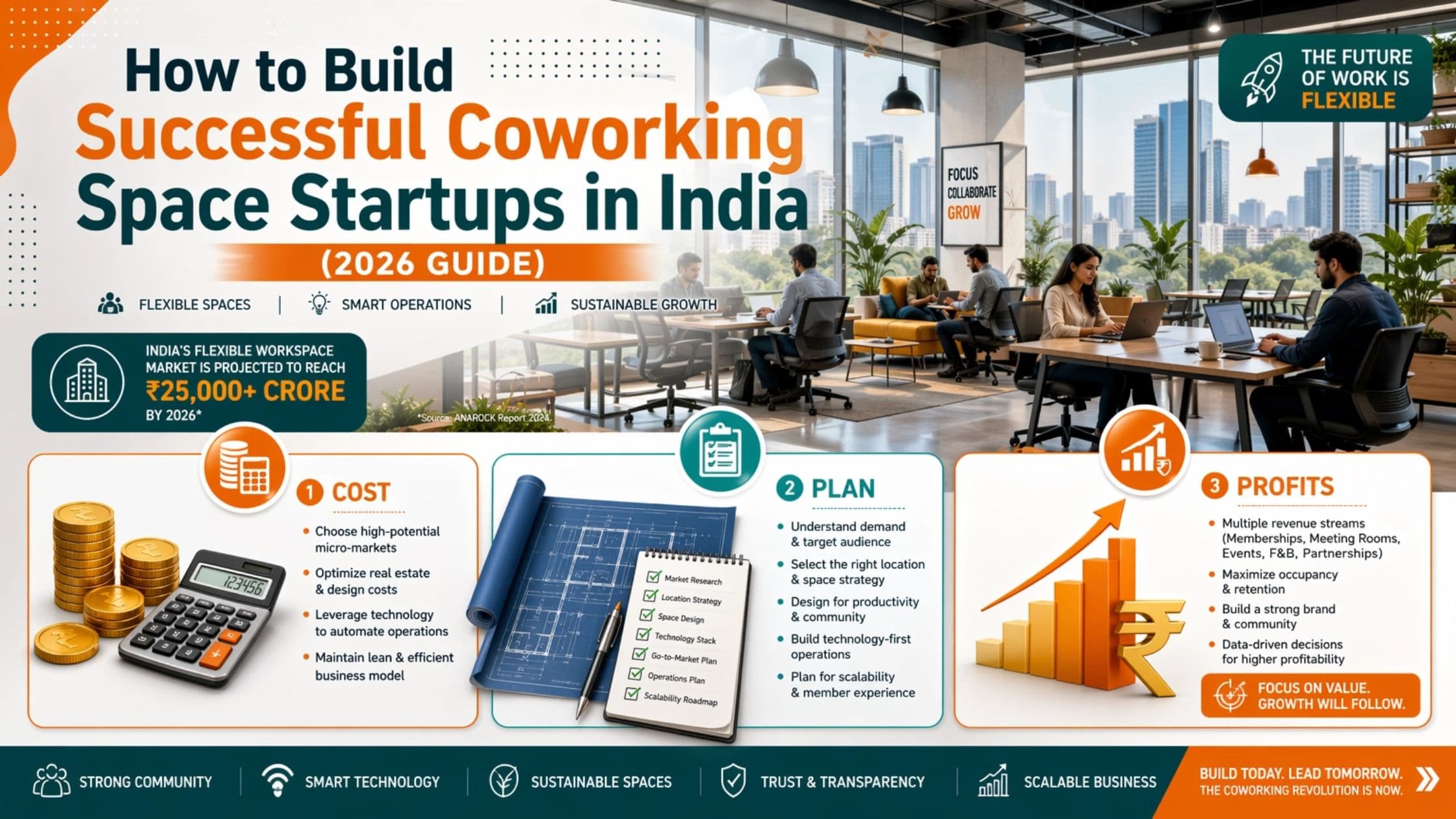
The Ultimate 2026 Guide to Building a Successful Coworking Space Startup in India
The landscape of the Indian workforce has undergone a seismic shift. As we navigate through 2026, the "traditional office" has been replaced by a demand for flexibility, community, and tech-driven environments. Whether it’s a freelancer in a Tier-2 city or a multinational corporation looking for a satellite hub in Gurgaon, the need for managed workspaces is at an all-time high.
If you are looking to enter this market, this 1,500-word deep dive will serve as your definitive blueprint for launching coworking space startups, covering everything from the coworking space business plan to the granular details of coworking space cost in India.
1. Understanding the Market: Why Coworking Business in India?
In 2026, India remains the third-largest startup ecosystem globally. However, the growth is no longer confined to just Bangalore or Mumbai. The "Reverse Brain Drain" and the rise of remote-first policies have made cities like Jaipur, Ahmedabad, and Chandigarh fertile ground for a coworking office setup in India.
The Core Drivers:Asset-Light Models: Modern companies prefer OpEx (Operating Expenditure) over CapEx (Capital Expenditure). They would rather pay a monthly membership than invest in long-term real estate leases and office furniture.
The Hybrid Work Normal: Most companies now operate on a 3-2-2 or 2-3-2 model (days in office vs. days at home), making flexible seating the only logical financial choice.
Networking Hubs: A coworking space isn't just about a desk; it’s an incubator for ideas. Founders find their next CTOs, and freelancers find their next big projects at the communal coffee bar.
Asset-Light Models: Modern companies prefer OpEx (Operating Expenditure) over CapEx (Capital Expenditure). They would rather pay a monthly membership than invest in long-term real estate leases and office furniture.
The Hybrid Work Normal: Most companies now operate on a 3-2-2 or 2-3-2 model (days in office vs. days at home), making flexible seating the only logical financial choice.
Networking Hubs: A coworking space isn't just about a desk; it’s an incubator for ideas. Founders find their next CTOs, and freelancers find their next big projects at the communal coffee bar.
2. Crafting a Robust Coworking Space Business Plan
Success in this industry is determined long before the first desk is installed. You need a data-driven coworking space business plan that addresses the following pillars:
A. Target Audience Segmentation
Don't try to be everything to everyone. Your space should cater to a specific niche:
Budget Nomad: Freelancers looking for high-speed internet and basic amenities at a low cost.
Scale-up Startup: Teams of 5–20 who need private cabins but shared communal areas.
Enterprise Satellite: Corporate teams that require high-level security, dedicated servers, and premium branding.
B. Location Strategy
When researching how to start a coworking space, location is your most significant variable.
Proximity to Transit: In cities like Delhi or Mumbai, being within 500 meters of a Metro station can increase your occupancy rate by 30%.
The "Vibe" Factor: Areas like Cyber Hub in Gurgaon or Indiranagar in Bangalore command higher premiums because of the surrounding lifestyle (cafes, gyms, and bars).
3. Coworking Space Cost in India: A 2026 Breakdown
One of the biggest hurdles for coworking space startups is the initial burn. Below is a realistic financial breakdown for a 2,500 sq. ft. facility in a Tier-1 Indian city.
Initial Capital Expenditure (CapEx)
| Item | Estimated Cost (INR) |
| Security Deposit (6 months) | ₹6,00,000 – ₹12,00,000 |
| Interior Fit-outs (Flooring, Glass partitions, Ceiling) | ₹10,00,000 – ₹18,00,000 |
| Ergonomic Furniture (Desks, Chairs, Pods) | ₹5,00,000 – ₹8,00,000 |
| IT & Security (Mesh Wi-Fi, Biometrics, CCTV) | ₹2,00,000 – ₹4,00,000 |
| Kitchen & Lounge Setup | ₹1,50,000 – ₹3,00,000 |
| Total Estimated CapEx | ₹24.5 Lakh – ₹45 Lakh |
Monthly Operating Expenditure (OpEx)Rent: ₹1,50,000 – ₹3,00,000
Electricity & Water: ₹40,000 – ₹70,000 (AC is the biggest cost driver)
Internet (Leased Line): ₹10,000 – ₹20,000
Staffing: ₹80,000 – ₹1,50,000 (Community Manager, Housekeeping, Security)
Marketing: ₹30,000 – ₹50,000
Rent: ₹1,50,000 – ₹3,00,000
Electricity & Water: ₹40,000 – ₹70,000 (AC is the biggest cost driver)
Internet (Leased Line): ₹10,000 – ₹20,000
Staffing: ₹80,000 – ₹1,50,000 (Community Manager, Housekeeping, Security)
Marketing: ₹30,000 – ₹50,000
4. Technical Requirements: Coworking Office Setup India
To stay competitive in 2026, your coworking office setup in India must go beyond "free tea and coffee."
Reliable Connectivity: A dual-ISP setup is mandatory. If the internet goes down for an hour, your reputation takes a hit that marketing cannot fix.
Smart Access: Use app-based entry systems. This allows you to track usage patterns and automate billing for overages.
Acoustics: This is the most overlooked part of coworking space startups. Use sound-absorbing panels and "Phone Booths" for private calls to ensure the main area remains a productive environment.
Ergonomics: Investing in ₹15,000 chairs instead of ₹3,000 chairs will reduce member churn significantly.
5. Revenue Models & Pricing Strategies
Your revenue shouldn't rely solely on desk rentals. Diversify your income to protect against low occupancy periods.
Hot Desks (Flexible): ₹6,000 – ₹10,000/month. Best for individuals who only need a spot for a few hours.
Dedicated Desks: ₹10,000 – ₹18,000/month. A fixed spot with a locker; builds long-term loyalty.
Private Cabins: ₹40,000 – ₹1,50,000/month. These are your "cash cows" and usually have the highest demand.
Virtual Office: ₹2,000 – ₹5,000/month. Providing a GST address and mail handling without a physical desk.
Ancillary Income: Charging for meeting rooms (hourly), printing, event space rental, and premium coffee.
6. Licenses and Legal Compliance
To run a coworking business in India, you need to ensure your legal foundation is rock solid.
GST Registration: Necessary for B2B billing (which most of your clients will require).
Shop and Establishment Act: Every state has its own version; mandatory for commercial entities.
Fire Safety NOC: Critical for high-occupancy spaces.
Building Use (BU) Permission: Ensure the property is legally cleared for "Commercial" or "IT/ITeS" use.
Professional Services: Use platforms like firststartup.in to streamline these registrations, ensuring you don't miss state-specific compliance.
7. Marketing and Occupancy: How to Fill the Seats
The biggest challenge for coworking space startups is the "Empty Room" syndrome.
Hyper-Local SEO: Optimize for keywords like "coworking space in [Your Area Name]." Your Google My Business profile should be your #1 lead generator.
Community Building: Host weekly "Demo Days" or "Founder Mixers." If people come for the event, they stay for the workspace.
Partnership Ecosystems: Offer discounts to members of local startup incubators or university alumni networks.
The Trial Strategy: Offer a "Free Friday" once a month. It lowers the barrier to entry and allows potential leads to experience your community firsthand.
8. ROI and The Path to Profitability
In a well-managed coworking business in India, the break-even point typically arrives between month 14 and month 20.
Profitability Formula:
To maximize ROI, aim for an occupancy rate of 80%.
Revenue: ₹6,00,000 (from 60 seats @ ₹10k average)
Expenses: ₹3,50,000 (Rent + OpEx)
Monthly Profit: ₹2,50,000
Annual Profit: ₹30,00,000
At this rate, a ₹45 Lakh initial investment is recovered in roughly 1.5 years, making it a highly lucrative venture compared to traditional real estate.
9. Challenges to Watch Out ForChurn Rates: Freelancers are price-sensitive. If a cheaper space opens next door, they might leave. Focus on "stickiness" through community.
Infrastructure Maintenance: AC units and coffee machines break down. Have a dedicated AMC (Annual Maintenance Contract) for everything.
Electricity Costs: Commercial power rates in India are high. Invest in sensor-based lighting and energy-efficient cooling to save up to 15% on monthly bills.
Churn Rates: Freelancers are price-sensitive. If a cheaper space opens next door, they might leave. Focus on "stickiness" through community.
Infrastructure Maintenance: AC units and coffee machines break down. Have a dedicated AMC (Annual Maintenance Contract) for everything.
Electricity Costs: Commercial power rates in India are high. Invest in sensor-based lighting and energy-efficient cooling to save up to 15% on monthly bills.
10. Conclusion: The Future of Shared Work
Building a coworking office setup in India in 2026 is no longer about just selling real estate; it is about selling productivity and connection. By meticulously planning your coworking space cost in India and completing the necessary startup registration, you can create a business that is both scalable and highly profitable.
The era of the "boring office" is over. Welcome to the era of the community-driven startup hub. Whether you are starting small with a 1,000 sq. ft. boutique space or aiming for a 10,000 sq. ft. enterprise center, ensuring proper startup registration and compliance will set a strong foundation for long-term success.