Benefits of Startup India Registration in India
First Startup
Sep 15, 2026
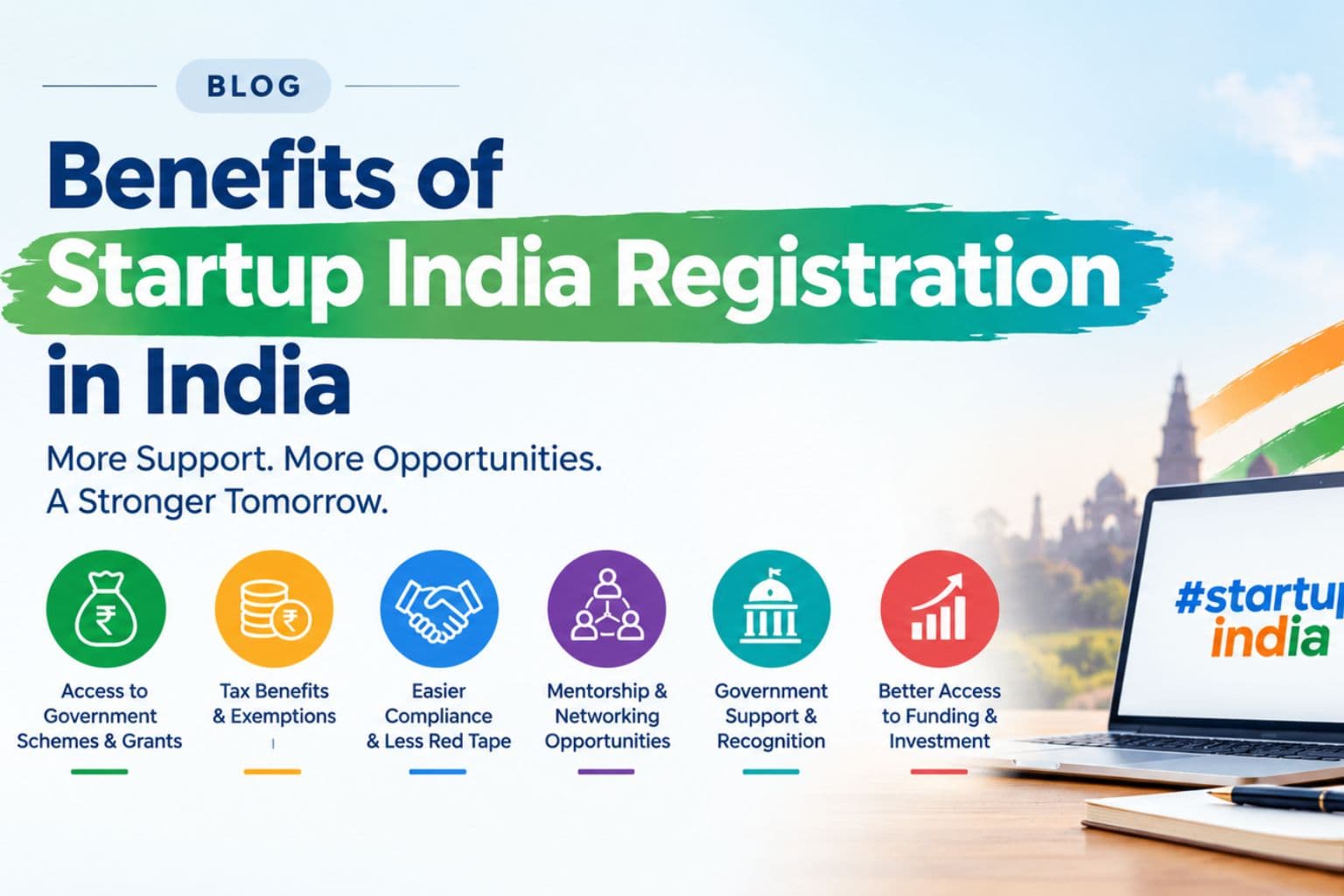
Starting a business in India can be exciting, but entrepreneurs often face challenges related to compliance, taxation, intellectual property, funding, and government procurement. The Startup India initiative was introduced to create a more supportive environment for eligible startups and encourage innovation, employment, and business growth.
One important step for eligible businesses is obtaining DPIIT Startup Recognition. Recognised startups may become eligible for several benefits, including intellectual property support, easier public procurement, self-certification, certain tax benefits, and access to startup-focused government initiatives. (Startup India)
In this blog, we will explain the benefits of Startup India registration in India, eligibility, important advantages of DPIIT recognition, the application process, and how professional assistance can help.
What Is Startup India Registration?
Startup India is a Government of India initiative designed to support startups and promote innovation and entrepreneurship.
In common usage, “Startup India Registration” often refers to obtaining DPIIT recognition as a startup. Eligible entities can apply for recognition through the government’s Startup India/NSWS system.
DPIIT recognition can provide access to various benefits, but it is important to understand that recognition does not automatically provide every benefit. Certain benefits, particularly tax exemptions, have additional eligibility requirements and may require a separate application or approval. (Startup India)
Benefits of Startup India Registration
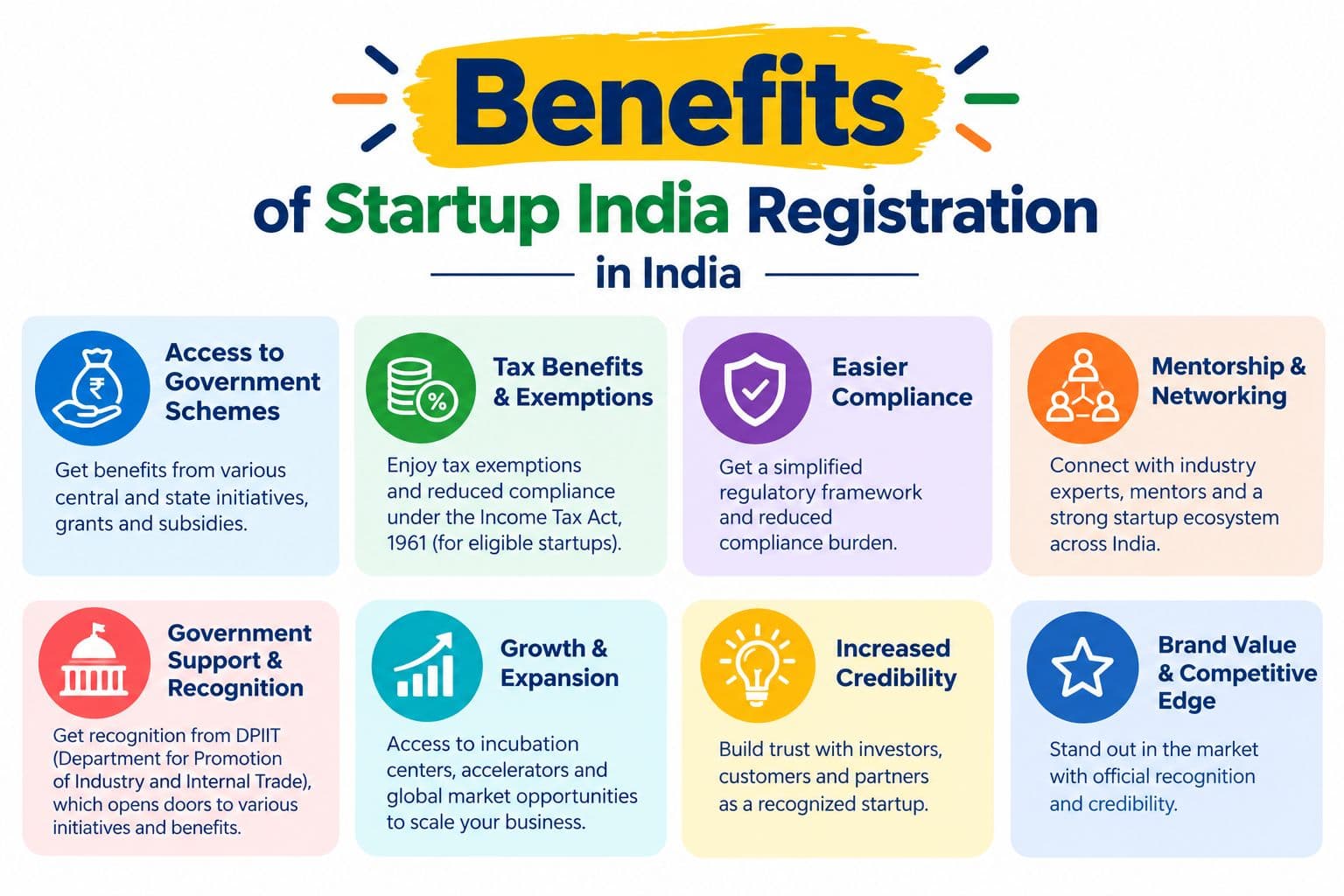
There are several potential advantages of obtaining Startup India or DPIIT recognition.
1. Self-Certification Benefits
One of the important benefits available to recognised startups is the ability to self-certify compliance under specified labour and environmental laws.
This can help reduce the regulatory burden for eligible startups and allow founders to spend more time developing their products and services.
The Startup India initiative provides self-certification mechanisms under specified labour and environmental laws, subject to applicable conditions. (Startup India)
2. Intellectual Property Rights Support
Intellectual property can be extremely important for startups developing innovative products, technology, brands, designs, or processes.
DPIIT-recognised startups can receive support under Startup India's intellectual property initiatives. Eligible startups can access facilitators and benefits related to patent and trademark applications.
The Startup India portal also highlights expedited patent examination and fee rebates for eligible recognised startups. (Startup India)
This can be particularly useful for:
Technology startups
Product-based businesses
Innovative service providers
New brands
Research-based businesses
Startups developing proprietary technology
3. Income Tax Benefits for Eligible Startups
Tax benefits are among the most searched-for Startup India registration benefits.
Eligible DPIIT-recognised startups may apply for income-tax exemption under Section 80-IAC, subject to the applicable eligibility conditions and approval requirements.
The Startup India portal states that eligible startups can receive a tax holiday for three consecutive financial years out of their first ten years since incorporation, subject to the relevant conditions. (Startup India)
Importantly, DPIIT recognition alone should not be treated as an automatic income-tax exemption. A startup must meet the relevant conditions and obtain the required approval/certificate for the tax benefit.
4. Easier Access to Government Tenders
Government procurement can provide significant opportunities for startups.
DPIIT-recognised startups may receive relaxation from certain traditional procurement requirements, such as prior experience, prior turnover, and earnest money deposit requirements, subject to applicable procurement rules.
This can help newer businesses compete for government contracts without having the same historical track record as established companies. (Startup India)
Startups can also explore government procurement platforms such as the Government e-Marketplace (GeM).
5. GeM and Public Procurement Opportunities
The Government e-Marketplace provides an online platform through which businesses can sell products and services to government buyers.
DPIIT-recognised startups can use Startup-related procurement benefits on GeM, subject to the applicable rules and seller requirements.
Startup India highlights benefits such as exemptions from certain requirements related to prior experience, prior turnover and earnest money deposits for eligible startups. (Startup India)
For startups looking to sell to government departments, DPIIT recognition can therefore be a useful step.
6. Support for Patents and Trademarks
A startup's intellectual property can become one of its most valuable assets.
Startup India provides IPR-related support for eligible recognised startups, including access to facilitators and benefits intended to make patent and trademark protection more accessible.
This can help startups protect:
Brand names
Logos
Inventions
Product designs
Technology
Business innovations
Protecting intellectual property at an early stage can also help a startup build stronger long-term brand value.
7. Easier Winding Up
Business failure is a normal part of entrepreneurship, and government policy also provides mechanisms intended to make eligible startup exits easier.
Startup India lists easy winding up of companies among the benefits associated with DPIIT recognition. (Startup India)
Eligible startups may be able to use applicable fast-track mechanisms, subject to the requirements of the relevant laws and authorities.
8. Access to Funding and Startup Schemes
Startup India also provides access to information and opportunities related to government-backed startup initiatives.
Recognised startups may be able to explore schemes and programmes relating to:
Funding
Investor connections
Incubation
Mentorship
Market access
Startup challenges
Government programmes
Startup India lists initiatives including the Startup India Seed Fund Scheme, Investor Connect and Fund of Funds-related support. (Startup India)
However, DPIIT recognition does not mean that funding is automatically granted. Each scheme can have its own eligibility requirements and application process.
9. Better Startup Ecosystem Access
Recognition can help an eligible startup become part of India's broader startup ecosystem.
Entrepreneurs can explore government programmes, incubators, mentorship opportunities, networking resources and startup-related initiatives through the Startup India platform.
This can be useful for founders who are looking beyond basic company registration and want to explore growth opportunities.
10. Reduced Regulatory Burden
For a new business, managing compliance can consume considerable time.
Startup India aims to reduce regulatory burden through measures such as self-certification and simplified processes for eligible startups.
This allows founders to focus more on:
Product development
Customer acquisition
Hiring
Marketing
Business expansion
Fundraising
The exact compliance relaxation depends on the applicable law and the startup's eligibility.
Who Can Apply for Startup India Recognition?
Eligibility criteria can change based on government notifications, so applicants should check the latest Startup India requirements before applying.
The current Startup India recognition information states that eligible entities can include Private Limited Companies, LLPs, registered partnership firms and cooperative societies, subject to the prescribed conditions. (Startup India)
The current recognition framework also includes conditions related to the age of the startup, turnover, innovation/improvement or scalability, and how the entity was formed. (Startup India)
Because eligibility rules have changed over time, businesses should rely on the latest official criteria rather than older articles or outdated information.
Startup India Registration Process
The general process for obtaining DPIIT Startup Recognition involves the following steps:
Step 1: Establish Your Business
First, the business should be established in an eligible legal structure, such as a Private Limited Company, LLP or eligible partnership entity.
Step 2: Create an Account
Create an account on the applicable government platform.
Step 3: Apply for Startup Recognition
Complete the Startup Recognition application with the required business and founder information.
Step 4: Submit Supporting Information
Depending on the application, information or documents supporting the startup's activities, innovation, website, pitch deck, or other relevant details may be required.
Step 5: Government Review
The application is reviewed according to the applicable recognition criteria.
Step 6: Receive DPIIT Recognition
If approved, the startup receives its digital recognition certificate.
The government states that there is no fee charged by the Ministry of Commerce and Industry for the DPIIT Certificate of Recognition. (Startup India)
Documents Required for Startup India Registration
Depending on the application and entity type, startups may need information such as:
Certificate of incorporation or registration
PAN details
Business information
Authorisation letter
Details of founders/directors/partners
Website information
Pitch deck or business information
Details supporting innovation or scalability
Other documents requested during the application
The exact requirements can vary depending on the applicant and the current government application process.
Startup India Registration vs DPIIT Recognition
It is important to distinguish between ordinary business registration and DPIIT startup recognition.
For example, incorporating a Private Limited Company creates a legal business entity, but it does not automatically mean that the company has DPIIT Startup Recognition.
Similarly, registering an LLP or partnership does not automatically provide all Startup India benefits.
An eligible entity generally needs to apply for DPIIT recognition separately to access benefits available under the Startup India framework. (Startup India)
Why Startup India Registration Is Important for New Businesses
For an eligible startup, DPIIT recognition can provide more than just a certificate.
It can help the business explore:
Government schemes
Tax benefits where eligible
IPR support
Government tenders
GeM opportunities
Self-certification benefits
Mentorship and ecosystem programmes
Funding opportunities
Regulatory support
However, every benefit has its own rules. Entrepreneurs should check eligibility before assuming that a particular incentive automatically applies.
How First Startup Can Help With Startup India Registration
Applying for government recognition can sometimes be confusing, especially for first-time entrepreneurs.
First Startup provides professional business registration and compliance support to help entrepreneurs understand the process and prepare their applications.
Our team can assist with:
Startup India registration
DPIIT recognition
Company registration
LLP registration
Partnership registration
MSME/Udyam registration
GST registration
Trademark registration
Business compliance
Startup documentation
If you are planning to start a new business and want to understand whether your business may qualify for Startup India recognition, professional assistance can make the process easier.
Frequently Asked Questions About Startup India Registration1. What are the benefits of Startup India registration?
Benefits associated with DPIIT-recognised startups can include self-certification, IPR support, public procurement relaxations, eligible tax benefits, easier exit mechanisms and access to various startup programmes. (Startup India)
2. Is Startup India registration the same as company registration?
No. Company registration creates a legal entity, while DPIIT Startup Recognition is a separate recognition under the Startup India initiative.
3. Is DPIIT recognition free?
The Ministry of Commerce and Industry states that it does not charge a fee for the DPIIT Certificate of Recognition. (Startup India)
4. Does every startup automatically get a tax exemption?
No. Tax exemptions have additional eligibility conditions and approval requirements. DPIIT recognition alone does not automatically guarantee a tax exemption. (Startup India)
5. Can an LLP apply for Startup India recognition?
Eligible LLPs can apply for DPIIT Startup Recognition, subject to the applicable eligibility criteria. (Startup India)
6. Can startups participate in government tenders?
Yes. DPIIT-recognised startups can access certain public procurement benefits, including relaxation of specified requirements, subject to applicable procurement rules. (Startup India)
7. Does Startup India help with trademark and patent registration?
DPIIT-recognised startups can access IPR support and facilitation under Startup India programmes, subject to applicable conditions. (Startup India)
8. How long does Startup India recognition take?
The timeline can vary depending on the application, documentation and government processing. Applicants should check the current official portal for the latest process and status.
9. Can a new business apply for DPIIT recognition?
A newly established business may apply if it meets the applicable Startup India eligibility criteria.
10. How can First Startup help?
First Startup can provide professional assistance with startup registration, DPIIT recognition, business registration and related compliance services.
Conclusion
The Benefits of Startup India Registration in India can make DPIIT recognition valuable for eligible entrepreneurs. From IPR support and public procurement opportunities to self-certification and certain tax benefits, the Startup India initiative offers several mechanisms designed to support startup growth.
However, entrepreneurs should remember that DPIIT recognition and individual benefits are not the same thing. Certain benefits require separate applications, approvals or additional eligibility conditions.
If you are planning to start a business or already operate an eligible startup, understanding DPIIT recognition can help you identify government benefits that may be relevant to your business.