
Trademark Registration for E-Commerce: A Complete Guide for Online Businesses
First Startup
Aug 27, 2026
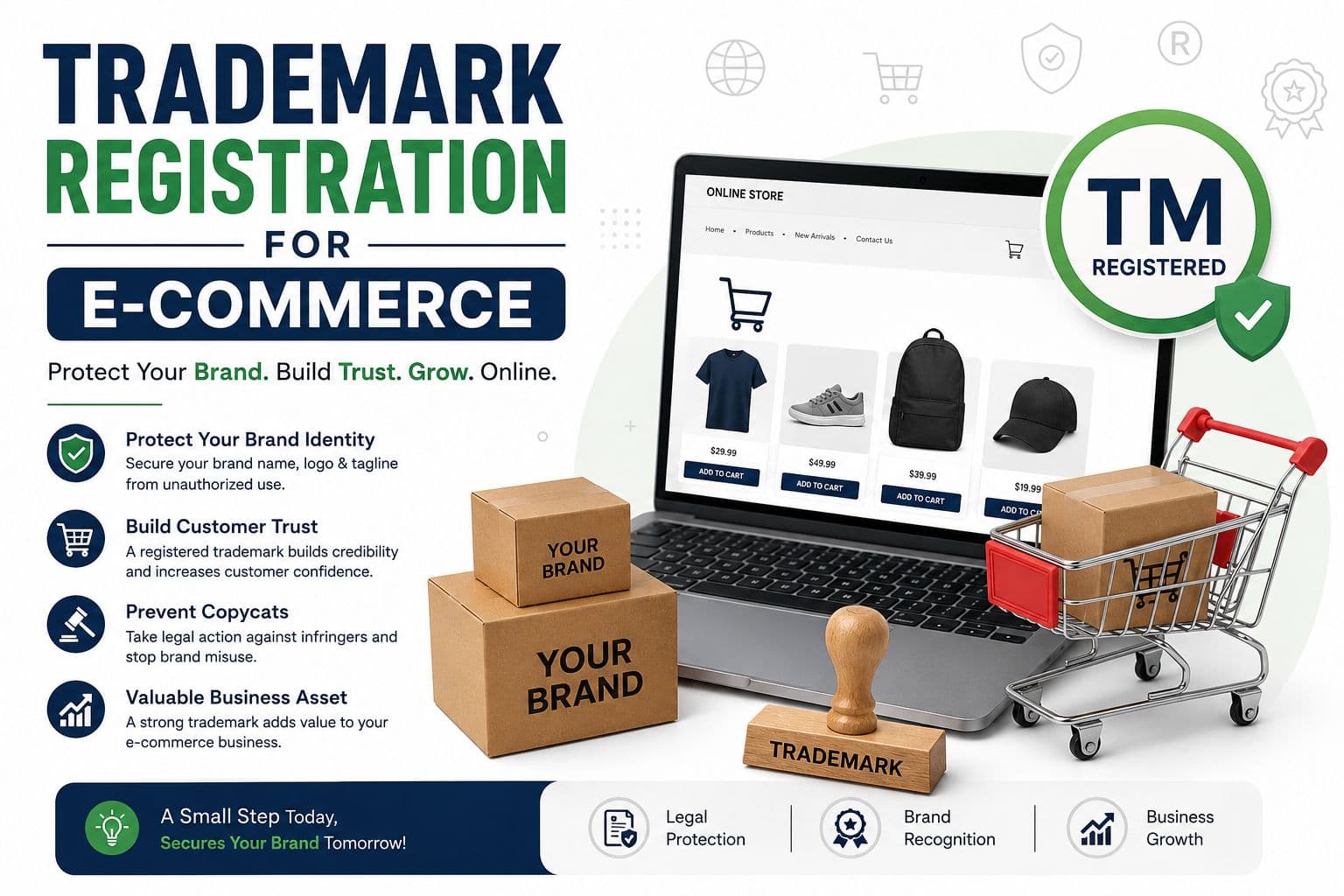
The e-commerce industry is growing rapidly, with thousands of businesses selling products and services through their own websites, marketplaces, and social media platforms. In such a competitive environment, building a recognizable brand is essential. However, creating a brand name, logo, or unique identity is only the first step. Protecting that identity is equally important.
Trademark registration for e-commerce helps online businesses protect their brand name, logo, tagline, and other distinctive elements from unauthorized use. Whether you are running a D2C brand, Amazon store, Shopify website, Instagram business, or online marketplace, registering your trademark can provide valuable legal protection and strengthen your brand.
What Is a Trademark?
A trademark is a unique sign, name, logo, word, symbol, phrase, or combination of elements that distinguishes the products or services of one business from another.
For an e-commerce business, a trademark may include:
Brand name
Business logo
Product brand
Tagline or slogan
Unique symbol
Packaging elements
Distinctive brand identity
For example, if you launch an online clothing brand under a unique name, registering that name as a trademark can help prevent other businesses from using a confusingly similar brand name for related goods or services.
Why Is Trademark Registration Important for E-Commerce Businesses?
E-commerce businesses operate in a highly competitive digital marketplace. A brand can become valuable very quickly, but it can also be copied easily.
Trademark registration provides several important advantages.
1. Protect Your Brand Name
Your brand name is one of your most valuable business assets. Trademark registration gives you legal rights over the registered mark in connection with the goods or services covered by the registration.
This can help you take action against businesses that improperly use an identical or confusingly similar trademark.
2. Prevent Brand Copying
Online marketplaces make it easy for businesses to reach customers, but they also make it easier for competitors to imitate successful brands.
A registered trademark can strengthen your position when dealing with unauthorized sellers, counterfeit products, or confusingly similar branding.
3. Build Customer Trust
Customers often associate a consistent and protected brand identity with professionalism and reliability. A trademark can support long-term brand recognition as your e-commerce business grows.
4. Support Marketplace Protection
Many major online marketplaces have brand-protection programs or procedures that allow eligible brand owners to report infringement. Having a registered trademark can be an important requirement or supporting document for such programs.
However, marketplace policies differ, so businesses should always check the current requirements of the platform they use.
5. Create a Valuable Business Asset
A trademark is not simply a legal document. It can become an intangible business asset.
As your e-commerce business grows, your trademark may gain significant commercial value through customer recognition, sales, marketing, and goodwill.
What Can E-Commerce Businesses Trademark?
Depending on the circumstances, an e-commerce business may apply to protect different aspects of its brand.
Common examples include:
Brand Name:
The name under which your products are sold.
Logo:
A distinctive graphical representation of your business or product brand.
Tagline:
A unique slogan associated with your business.
Product Name:
A distinctive name used to identify a particular product line.
Packaging or Brand Elements:
Certain distinctive elements may potentially receive trademark protection if they satisfy the applicable legal requirements.
It is important to select the correct trademark class based on the goods or services offered by the business.
Trademark Classes for E-Commerce
Trademark applications in India are classified according to the Nice Classification system, which contains different classes for different goods and services.
For example, an e-commerce business selling clothing may require protection in a class covering clothing, while a business selling cosmetics may need a different class.
An e-commerce platform itself may also provide services that fall under a separate class.
Therefore, choosing the correct trademark class is an important part of the registration process. Registering a brand in the wrong class may not provide the protection you expect for your actual products or services.
Trademark Registration Process for E-Commerce
The trademark registration process generally involves several stages.
Step 1: Choose Your Brand Name
Select a distinctive brand name that can be legally protected. Avoid names that are purely descriptive, generic, or confusingly similar to existing trademarks.
Step 2: Conduct a Trademark Search
Before filing an application, conduct a trademark search to identify potentially conflicting marks.
A proper search can help determine whether a similar trademark already exists and reduce the risk of objections or opposition.
Step 3: Select the Appropriate Class
Identify the trademark class or classes that correspond to your products or services.
E-commerce businesses should select classes based on what they actually sell or provide rather than simply choosing a class because they operate online.
Step 4: Prepare the Application
The required information and documents are prepared for filing the trademark application with the appropriate authority.
The application generally contains details such as the applicant's information, trademark representation, relevant goods or services, and other required information.
Step 5: File the Trademark Application
The application is submitted to the Indian Trade Marks Registry. After filing, the applicant receives an application number that can be used to track the application.
Step 6: Examination
The application is examined by the Trademark Registry. The examiner may accept the application or raise objections based on applicable legal grounds.
If an objection is raised, an appropriate response may need to be filed within the prescribed period.
Step 7: Publication
If the application proceeds successfully, it may be published in the Trade Marks Journal, allowing third parties an opportunity to oppose the registration.
Step 8: Registration
If there is no successful opposition and all requirements are satisfied, the trademark can proceed to registration and the registration certificate can be issued.
Documents Required for Trademark Registration
The exact documents can vary depending on the applicant and application type. Commonly required information may include:
Applicant's identity and address details
Business or company details, where applicable
Trademark name or logo
Description of goods or services
Power of Attorney, where applicable
Proof supporting a claimed prior use, if applicable
Business-related documents where required
A professional should review the application before filing to ensure the information and supporting documents are appropriate.
Trademark Registration for Amazon, Flipkart, Shopify and Other Online Sellers
Online sellers often build their entire business around a particular brand. If another seller starts using a similar name or selling counterfeit products under the same branding, it can negatively affect customer trust and sales.
Trademark registration can therefore be particularly valuable for:
Amazon sellers
Flipkart sellers
Shopify stores
D2C brands
Instagram businesses
Online fashion stores
Beauty and cosmetics brands
Food and beverage brands
Electronics brands
Private-label businesses
Online service providers
For businesses planning to scale, protecting the brand at an early stage can be a smart strategic decision.
Trademark Registration vs. Company Registration
Company registration and trademark registration serve different purposes.
Company registration establishes a legal business entity, such as a private limited company or LLP.
Trademark registration protects a brand identity in relation to specified goods or services.
For example, a company may be registered under one legal name while selling products under a different brand name. In such a situation, the brand name may need separate trademark protection.
Therefore, registering a company does not automatically give trademark rights over its brand name.
Common Mistakes E-Commerce Businesses Should Avoid
Many online businesses delay trademark protection until they encounter a problem. This can create unnecessary complications.
Some common mistakes include:
Using a brand name without conducting a trademark search.
Assuming company registration automatically protects the brand.
Selecting the wrong trademark class.
Investing heavily in marketing before checking brand availability.
Ignoring trademark objections or notices.
Using a logo or brand name that is too similar to another business.
Failing to monitor the market for potential infringement.
Conducting proper due diligence before launching a major marketing campaign can save time and money in the long run.
How Much Does Trademark Registration Cost?
The total cost of trademark registration can depend on several factors, including the type of applicant, number of classes, professional fees, and government filing fees.
An e-commerce business should consider the registration cost as part of its overall brand-building investment rather than simply as an administrative expense.
For an accurate estimate, businesses should review the current government fee structure and professional service charges applicable to their specific application.
Benefits of Registering a Trademark Early
Registering your trademark at an early stage can provide several strategic benefits.
It can help establish stronger ownership claims, support brand expansion, improve investor or buyer confidence, and reduce the risk of having to rebrand after investing heavily in advertising.
Imagine spending years building an online brand only to discover that another business has stronger rights to a similar name. Rebranding at that stage can involve substantial costs for packaging, website design, advertising, social media, product listings, and customer communication.
Early trademark planning can help reduce this risk.
Final Thoughts
For an e-commerce business, a brand is much more than a name or logo. It represents customer trust, reputation, marketing investment, and future business value.
Trademark registration for e-commerce can help protect this valuable identity and provide a stronger legal foundation for business growth. Whether you are launching a new D2C brand or already selling successfully through online marketplaces, considering trademark protection early can be an important part of your business strategy.
Before filing, conduct a proper trademark search, select the appropriate classes, prepare the application carefully, and monitor the application throughout the registration process.
If you are planning to launch or expand an online business, protecting your brand today can help you build a stronger and more secure e-commerce business for the future.
Frequently Asked Questions
Is trademark registration necessary for an e-commerce business?
It is not mandatory simply because a business operates online, but registering a trademark can provide important legal and commercial protection for the brand.
Can I trademark my Amazon brand name?
Yes, an eligible brand name used for relevant goods or services can potentially be registered as a trademark, subject to applicable trademark requirements.
Does company registration protect my e-commerce brand?
No. Company registration and trademark registration provide different forms of protection. A registered company name does not automatically create trademark rights over a brand.
Can I trademark a logo as well as a brand name?
Yes, a distinctive logo can potentially be registered separately as a trademark. Businesses should consider their specific branding strategy when deciding what to protect.
How long does trademark registration take?
The timeline can vary depending on examination, objections, publication, opposition, and other factors. Some applications proceed relatively smoothly, while others can take considerably longer.
Should I conduct a trademark search before launching my online store?
Yes. Conducting a trademark search before investing significantly in branding, packaging, advertising, and inventory can help identify potential conflicts at an early stage.